
Make the fabric. Measure what is true.
Knit It Once turns your swatch and target measurements into practical counts. Use one tool for a quick answer, or keep several results together in a private project.
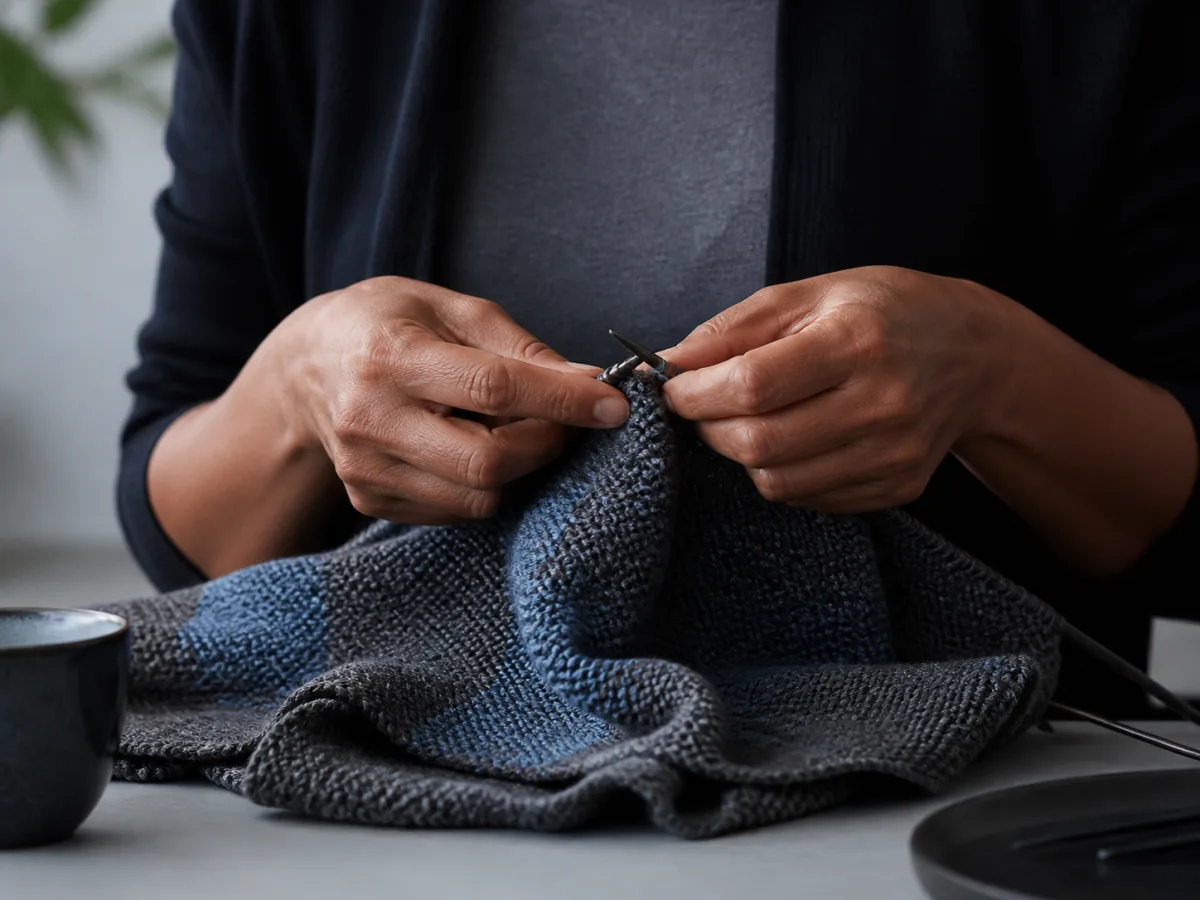
A reliable sequence
From swatch to finished project.
You do not need every step for every project. Start at the decision you are making now.
- 01Make a swatchUse the yarn, tools, and stitch pattern planned for the project.
- 02Measure gaugeBlock the swatch, let it dry, and count across the middle.
- 03Resolve the fitIf your gauge differs, resize the pattern before starting.
- 04Plan size and yarnTurn measurements into counts and estimate the material required.
- 05Make and keep your placeSave useful results to a project and track rows as you work.
Useful language
The basics, without extra theory.
- Pattern
- Instructions that tell you how to make something.
- Stitch
- One loop or structural unit in the fabric.
- Row
- One horizontal line of worked stitches.
- Gauge
- How many stitches and rows fit inside a measured area.
- Swatch
- A small test piece made before the real project.
- Skein
- One packaged unit of yarn.
- Blocking
- Finishing the fabric so it settles into its intended size and shape.
The calculators
Open the question you need to answer.
Every calculator keeps its inputs, live result, formula, and limitations in the same order.
01Gauge calculatorWhat is my real gauge?
What it does
Gauge tells you how many stitches and rows fit inside a known measurement.
When to use it
After making and blocking a swatch in the fabric you plan to use.
What you need
The stitches and rows you counted, plus the width you measured.
What you get
Stitches and rows per inch or centimetre, with the calculation shown.
02Pattern resizeMy gauge is different. What do I do?
What it does
It adjusts the pattern stitch count to suit the fabric your hands actually make.
When to use it
When your blocked swatch does not match the pattern gauge.
What you need
The pattern gauge, your gauge, and the original stitch count.
What you get
A practical adjusted count that respects the pattern repeat.
03Yarn estimatorDo I have enough yarn?
What it does
It uses a measured swatch to estimate yarn for one or more project pieces.
When to use it
Before buying yarn or committing a limited quantity to a project.
What you need
Swatch size, yarn used, project dimensions, and an optional skein length.
What you get
Estimated yardage or metres, a range, and an optional skein count.
04Blanket sizeHow many stitches and rows do I need?
What it does
It converts a target blanket size into workable stitch and row counts.
When to use it
When you know the finished size and have a blocked gauge swatch.
What you need
Target dimensions, gauge, border width, and any pattern repeats.
What you get
A starting count, row count, and the calculated finished dimensions.
05Granny squaresHow many squares do I need?
What it does
It plans columns, rows, joins, and optional yarn for a modular blanket.
When to use it
After measuring one finished, blocked square.
What you need
Blanket size, square size, join allowance, and optional yarn details.
What you get
The full layout, total square count, finished size, and optional yarn estimate.
06Row counterWhere did I stop?
What it does
It keeps your current row, repeat position, and shaping reminders visible.
When to use it
While making, especially across long sessions or repeating sections.
What you need
Only your current row. Targets and reminders are optional.
What you get
A large, one-handed counter that can be attached to a local project.
Keep related numbers together.
Projects collect calculations, notes, material details, and row progress locally in your browser.